



By integrating heritage-related knowledge into classroom subjects and combining lessons with hands-on experiences and traditional art practices, schools are bringing cultural values closer to students, fostering pride in their heritage and encouraging them to preserve and promote their ethnic identities.
During recess at Mường Luân Secondary School in Mường Luân commune, the schoolyard comes alive with traditional Lamvong dances of the Lao ethnic group. To lively music, groups of students gracefully perform the dance, with gentle wrist movements and rhythmic steps. The activity takes place every Tuesday and Thursday, attracting enthusiastic participation from students.
In 2023, the traditional dance art of the Lao people in Điện Biên was recognized as a national intangible cultural heritage. To help preserve and promote this heritage, Mường Luân Secondary School has incorporated it into its educational activities. The school has 37 classes and 1,337 students, including 90 Lao students. It combines lessons on the dance’s origins and significance with practical instruction, organizes cultural exchanges, and invites artisans and older residents knowledgeable about traditional culture to teach students.
To date, every student at the school has had the opportunity to learn about and practice Lao traditional dance, making this heritage a familiar part of everyday school life.
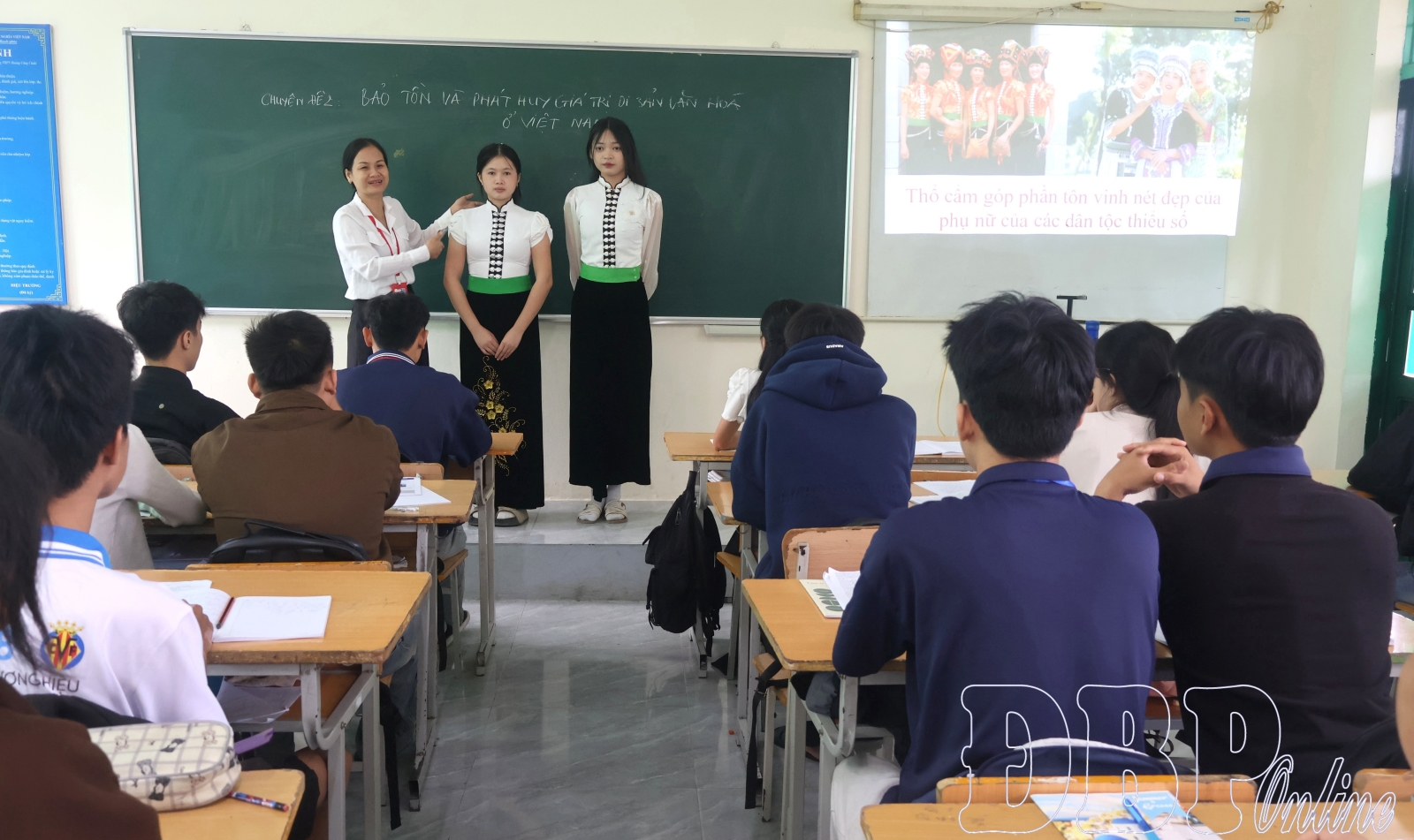
Alongside group activities, heritage-related knowledge is incorporated into literature, history and geography, arts, and local education classes. Stories about customs, festivals, traditional clothing and musical instruments serve as teaching materials, making lessons more engaging and closely connected to everyday life.
Lò Thảo Vy, a student in class 8A1 at Mường Luân Secondary School, said: “I am very happy to learn and perform the Lamvong dance with my friends at school. I especially enjoy recess, when the whole schoolyard comes alive with music and everyone joins the dance. Through each practice session, we learn more about the meaning of the dance. It makes us even prouder of our heritage and inspires us to share the beauty of our culture with more people.”
At Hoàng Công Chất High School, heritage education is integrated into teaching as part of efforts to renew teaching and learning methods. The school currently has 27 classes and 1,078 students, more than 53% of whom are Thai.
At the beginning of each school year, subject departments proactively develop plans to incorporate heritage education into their curricula. In the Grade 10 history program, students study the topic “Preserving and promoting the value of cultural heritage in Vietnam.” Grade 12 local education classes introduce students to the province’s intangible cultural heritage and distinctive local products.
Notably, xòe Thai dance was inscribed by UNESCO on the Representative List of the Intangible Cultural Heritage of Humanity in 2021, making it an especially accessible and engaging subject for students.
Rather than simply absorbing information through lectures, students are encouraged to seek out materials, exchange ideas, take part in discussions and demonstrate their understanding of heritage through drawings, videos and presentations. Some topics have also developed into school-level research projects on cultural preservation and traditional cuisine.
To connect classroom learning with practical experience, the school maintains clubs and arts groups, with teachers who have received specialized training guiding students in traditional xòe dances. Students have opportunities to perform and participate in cultural exchanges at competitions and arts programs, notably the first Ethnic Cultural Festival of Thanh An commune in 2025.
According to Đào Thị Minh Thịnh, a history teacher at Hoàng Công Chất High School, incorporating local cultural heritage into lessons has made the subject more engaging and sparked students’ curiosity and interest in exploration. Many students actively collect materials, learn about customs and traditions, and share stories connected to their own communities. As a result, classroom knowledge becomes more relatable, helping students appreciate traditional cultural values and develop a stronger sense of responsibility for preserving them.
Home to 19 ethnic groups, Điện Biên boasts a rich cultural heritage, with each community contributing its own distinctive traditions. Folk songs, dances, festivals and customs provide valuable resources for schools to enrich classroom instruction and experiential learning activities.
Heritage education is particularly meaningful at schools in mountainous areas, where cultural traditions closely tied to local communities can be brought to life in the school environment. This helps students more easily discover and connect with the distinctive cultural values of their homeland.
Nguyễn Minh Tiến, Principal of Sính Phình Semi-boarding Ethnic Minority Lower Secondary School in Sính Phình commune, said that with most of its students coming from the Hmông ethnic group, the school places particular emphasis on introducing distinctive local cultural traditions, especially Hmông reed-pipe music, into its teaching.
In addition to incorporating heritage content into relevant subjects, the school invites artisans to give live demonstrations and introduce students to the Hmông reed pipe and the significance of its traditional melodies. The sound of the instrument echoing through classrooms, accompanied by artisans’ stories about local customs and festivals, makes lessons more engaging and inspires students to take pride in and value their cultural roots.
Preserving cultural heritage is a shared responsibility that requires sustained efforts to pass traditions down from one generation to the next. Through practical initiatives, schools across the province are helping nurture students’ appreciation of traditional culture while strengthening their awareness of and responsibility for safeguarding it. These efforts provide an important foundation for ensuring that cultural heritage is preserved, passed on and continues to thrive in modern life.
Phương Dung










You have 500/500 characters left
Please enter 5 or more characters!!!